October 26, 2026
Jerome Wouters on why European businesses should give their people time to learn through practical AI experiments.

Jerome Wouters
Managing Director
At Samsung, I learned to pay attention when customer research went off script. Someone would say something unexpected, or use a product in a way we hadn’t anticipated, and suddenly the idea we had been pursuing looked less convincing.
Those were often the most useful moments. They gave us a reason to reconsider something we thought we understood. I still look for them.
It is one reason I worry about how businesses approach AI training. A demonstration usually goes according to plan. Someone shows a carefully chosen task, the technology produces an impressive answer, and everyone leaves with a vague sense that their business should be doing more of this.
The useful learning starts when you try it yourself, on something you understand well enough to spot the mistakes.
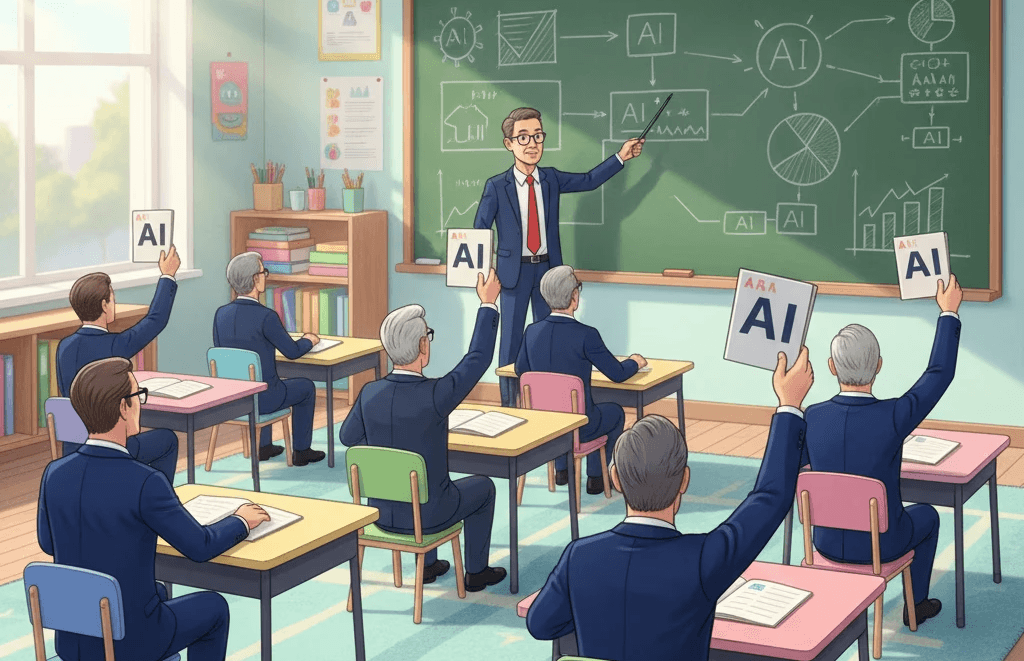
For European businesses, I would put much more investment there. Give people time to work through actual problems with AI, including the senior people approving the budgets.
My work at AWS was with financial services organisations across EMEA. In 2020, I co-wrote an article about how banks could respond to changing expectations around sustainability. We argued for making early, exploratory investments, using the cloud to test ideas cheaply while customer needs were still taking shape.
I find myself returning to that argument with AI. There is a temptation to wait until the direction is clearer. But some of the understanding needed to make a good investment decision only comes from trying things.
That puts a responsibility on leadership. You cannot ask employees to experiment, leave their workload untouched, give them uncertain guidance about which tools they can use, and expect much to happen. Nor can you delegate all the learning to IT. The commercial decisions remain yours.
I would rather see an executive team spend an afternoon working through one of its own processes than sit through another presentation on the future of AI. Take a supplier assessment or the preparation for a customer meeting. Try the tools. Look closely at what they produce. Work out how much checking is required and whether the result is actually useful.
The exercise may reveal that the opportunity is smaller than expected. That is useful information before a large investment. It may also reveal that someone in the room has a much better idea.
Europe has considerable expertise inside its businesses. An experienced underwriter or operations manager can recognise problems that someone demonstrating a model will miss. We should be helping those people bring their judgment to this technology, and giving them a real say in how it enters their work.
This is what I mean by upskilling. People need enough practical experience to make informed decisions, challenge a proposal and take responsibility for what follows.
The next time a leadership team approves an AI initiative, I would like to see time set aside in their own calendars to use it. They should be able to explain where it helped, where it failed, and what they changed as a result.
